
You’ve noticed some warning signs you need a new roof for your home. As an essential part of your home’s structure, a roof protects your house from fire, water, damage, pests and the elements. However, a quality roof requires a significant financial investment to optimise its performance and ensure it has a long life.
Choosing an energy-efficient roof also has many benefits, including savings on your power bills. But how does metal roofing improve your home’s energy efficiency, and what colour roof is the most energy efficient?
Factors that affect energy-efficient roofing
Before we look at what colour metal roof is most energy efficient, let’s consider some of the other factors that affect energy-efficient roofing, and some of the benefits:
Heat retention
The air in your roof cavity tends to be a lot warmer than the air in the rest of your home because hot air rises and roofs are exposed to a lot of solar energy from the sun. Energy efficient roof materials like slate, ceramic, stone or concrete tiles will absorb and trap heat and continue to emit warmth into your ceiling cavity. Metal roofing is a good heat conductor but a poor insulator, so metal roofs can be ideal for homes that are located in hot climates.
Ventilation
In terms of ventilation, cooling and heating costs can be reduced in your home by controlling the heat trapped in your roofing cavity. Lowering the temperature of your home is often as simple as encouraging warm air to exit the apex of your roof via vents in the soffits of your eaves. They can help draw cool air into the roof, and push hot air upwards and out of the ridge vents at the top of your roof.
Insulation
When heating your home in winter, the internal heat conducts outwards through the roof and walls and hot air can escape through gaps around windows and doors. Because hot air rises, most of the heat escapes through the ceiling so installing roof insulation like ceiling batts can help minimise this process. Homes warmer climates often have no need for bulk insulation so ‘cool’ roofs that are clad or painted with materials that both release and reflect solar energy are a great option.
Eaves
Eaves are the parts of a roof that hang out over walls in order to provide shade to your home’s exterior. If they are designed correctly, they will block summer sun, while still allowing winter sun.
Benefits of energy-efficient roofs
- Reduced energy costs: An energy-efficient roof helps regulate your home’s temperature by minimising heat gain in summer and heat loss in winter. This reduces the need for cooling and heating, which can lower your energy bills.
- Improved comfort: An energy-efficient roof contributes to a more comfortable living environment by maintaining a more stable indoor temperature. This is particularly beneficial in locations with extreme climates and/or drastic temperature fluctuations.
- Environmental impact: Reducing your energy consumption lowers your carbon footprint, which can contribute to a decrease in greenhouse gas emissions. This can be beneficial for the environment and help combat climate change.
- Extended roof life: Energy-efficient roofing materials often have better resistance to UV rays and weather conditions, which can extend the life of your roof. This can mean fewer repairs (or even a roof replacement) over time.
- Enhanced property value: Homes with energy-efficient features are often more attractive to buyers. This can increase your property’s appeal and market value, potentially leading to a higher resale price.
Types of roofing materials
Like other construction materials, many types of roofing materials have been used over the years. Slate, ceramic, concrete, stone, terracotta and decramastic tiles (pressed metal tiles) have been on-trend, and some still are, but these days, the most popular roof Australia-wide is a steel roof.
Traditionally known as a corrugated iron, it is actually steel — an alloy composed of carbon and iron. Because steel is prone to rusting, three specific types of steel are typically used:
- Galvanised steel: which is steel with a zinc coating to prevent corrosion.
- Stainless steel: which includes chromium to prevent rusting and corrosion.
- Coated steels: such as COLORBOND® Steel and ZINCALUME® Steel, which consist of a steel core and corrosion-resistant coating.
What is the most energy-efficient roofing material?
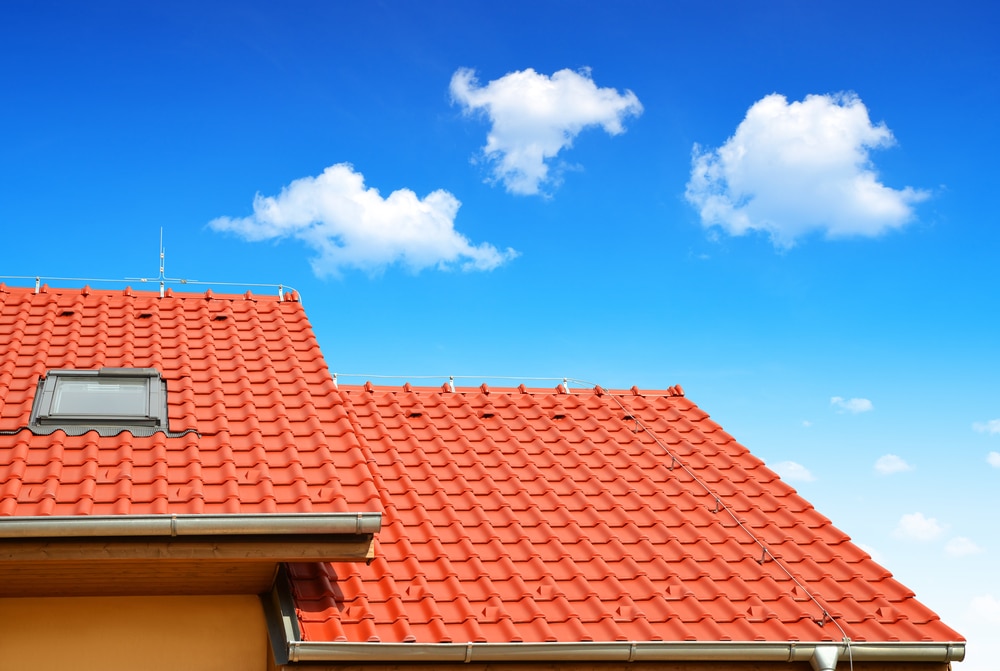
Many types of tiles (terracotta tiles, in particular) are thick and hold onto heat, so they are not ideal for hotter climates. After sunset, it can also take a while for built-up heat to radiate back out, increasing the amount absorbed into your home. Steel roofs today are highly engineered, with state-of-the-art paint and coatings that not only hold their colour but also help reflect heat away from your home.
Benefits of a steel roof
Steel roofing has a range of benefits, including:
- It is incredibly strong, making it durable and dent-resistant.
- It is weather-resistant, making it ideal for regions prone to extremes in temperature.
- It provides superior protection from wind uplift and water infiltration.
- It reflects heat and provides fire resistance.
- It is energy efficient and helps to reduce heating and cooling costs.
- It is low maintenance.
- It resists mould and mildew growth.
- It resists rust and deterioration.
- It retains its structural integrity and appearance over time.
- It can be installed with insulation materials that further enhance its energy-saving properties.
- It is easy to install.
- If properly installed and well-maintained, a metal roof can last 50 years or more!
- It can increase the value of your home due to its durability, energy efficiency, and aesthetic appeal.
- It is available in a wide range of colours, styles and finishes.
What is the best colour roof for energy efficiency?
The qualities of steel roofs can make your home more energy efficient. However, there is another factor that can affect its efficiency — colour. Colour is an essential aesthetic factor, but it can also affect a roof’s energy efficiency. At Strongguard, all our metal roofing products come from BlueScope Steel, an Australian-owned company that supplies COLORBOND® Steel and ZINCALUME® Steel products.
They are engineered for Australia’s harsh weather conditions, have effective reflective coatings, and come in a vast range of colours. So, what is the most energy efficient roof colour? It depends on the product, the coatings used, and the shade of colour you choose, but here is a rough guide.
Black
A simple fact — darker colours absorb more heat than lighter ones — whether it’s a T-shirt, your car or your roof. This could be enough for you to choose a black roof, particularly if you live in a cold region. However, with the right design and installation, they are also suitable for warmer areas and can have energy-efficient properties.
Silver and grey
Silver is a light colour, making it more thermally efficient than darker alternatives.
Dark green and maroon
Like black, these darker shades may absorb more heat, but with the proper insulation beneath the surface, rising temperatures won’t be a big concern.
Green and red
With green and red, it all depends on the shade. Lighter reds and greens will probably see similar thermal efficiency to light grey or silver.
Energy efficiency, regardless of colour
Darker roofs will absorb more heat, but this can be counteracted with reflective coatings to enhance your home’s thermal efficiency. Other finishes can also affect the amount of heat absorbed and reflected. Dull surfaces have a matte appearance and will absorb sunlight and the heat that comes with it. This is ideal for colder climates.
Alternatively, glossy surfaces reflect heat and sunlight, so they can be ideal for hotter climates. However, with the advancement of roofing technology and construction, these days, peak thermal performance can be guaranteed regardless of the colour palette you choose. The options are endless!
Whether you need repairs, maintenance or a new energy-efficient roof, we can help! Contact our expert team today.
References
- Water Master Roofing (17 April 2020), ‘Does colour matter when it comes to choosing your new metal roof?’, Water Master Roofing article, accessed 29 July 2024